
 Image 1 of 3
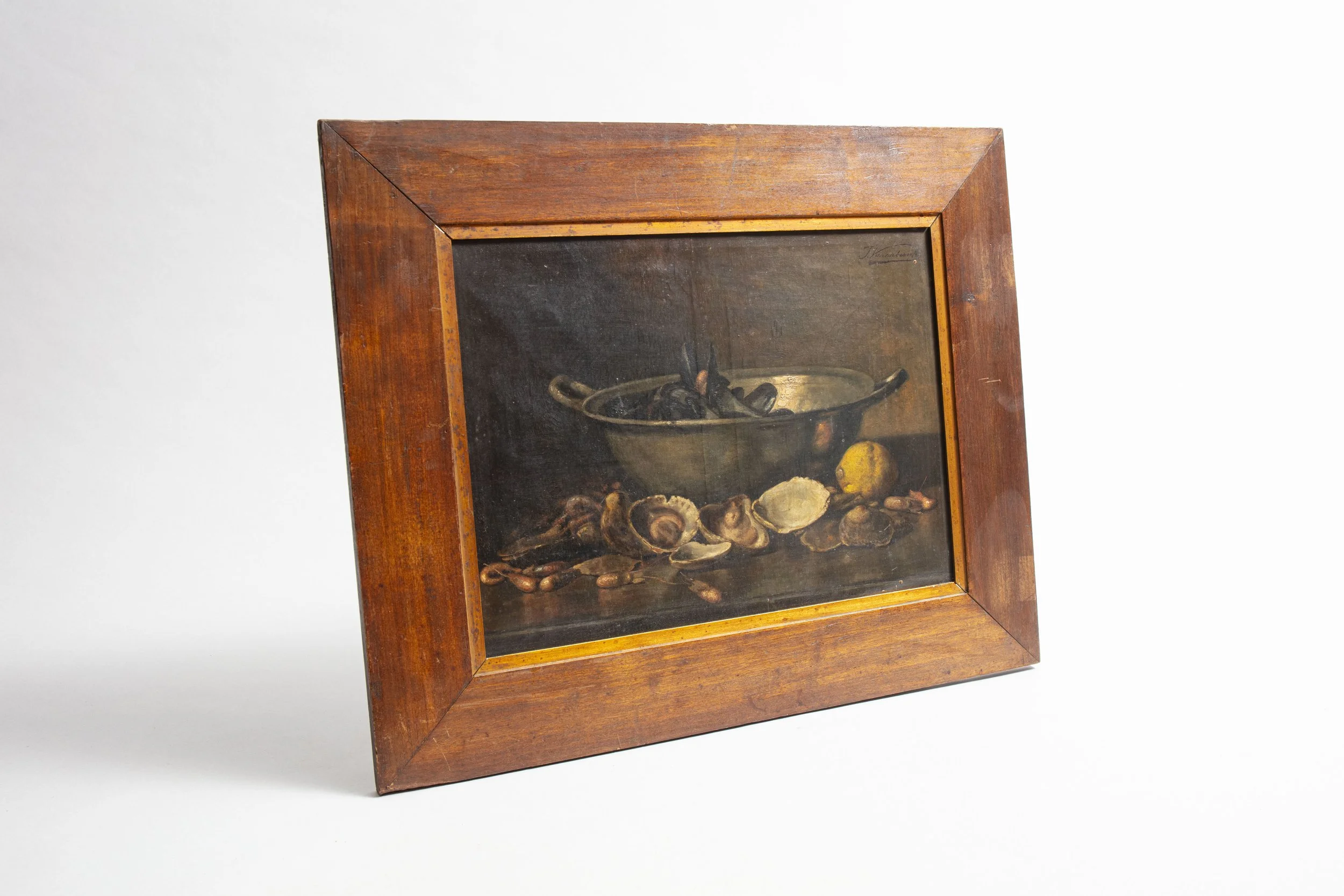 Image 2 of 3
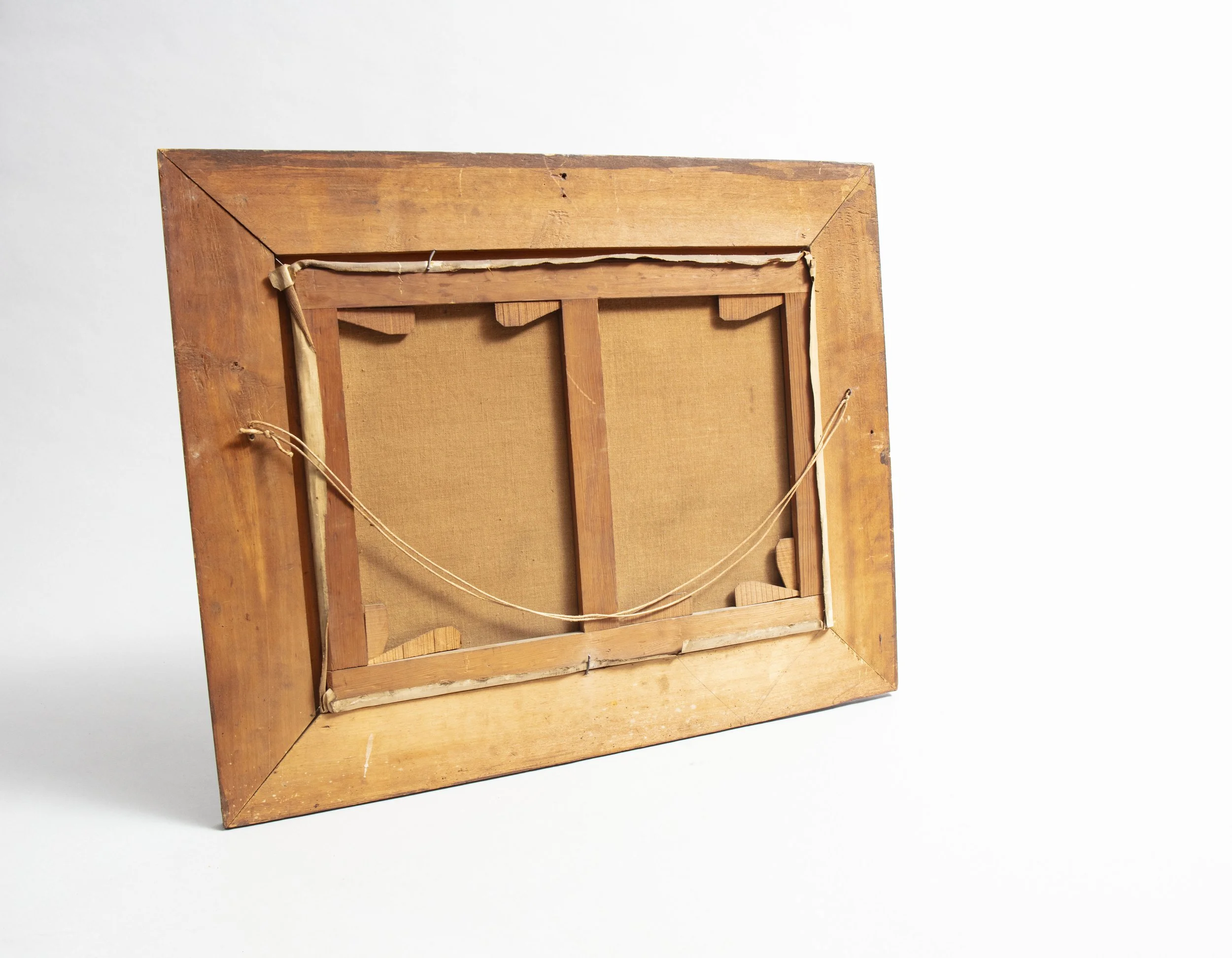 Image 3 of 3
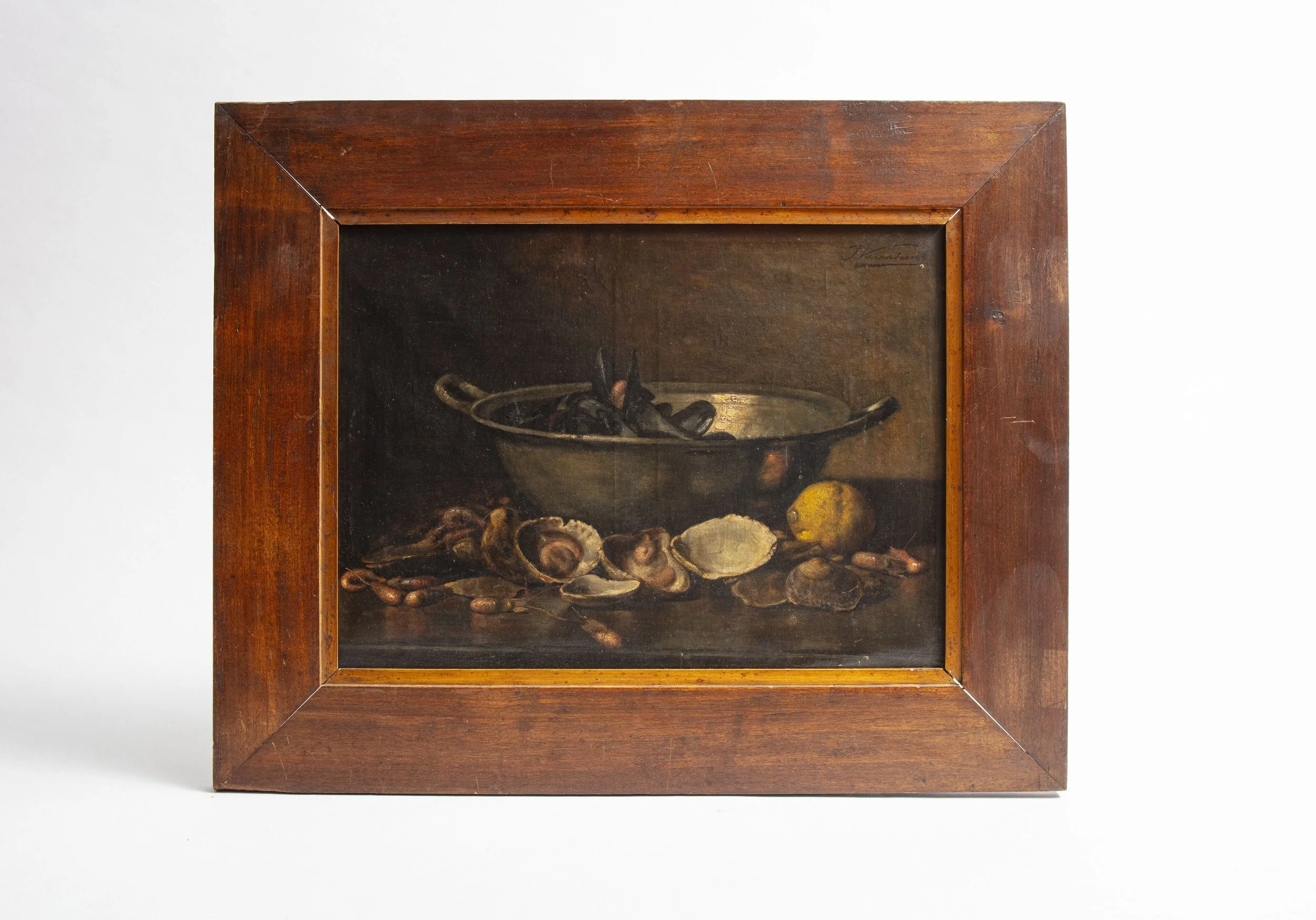
Still life with oysters signed T. Vurenbergh in the top right-hand corner. Oil painting on canvas. With frame: 73,5 cm long, 59 cm wide, 1,7 cm thick. Without frame: 40 cm long x 54 cm wide x 1,6 cm thick.
In the 19th century, the rediscovery of the Dutch Golden Age prompted many painters (sometimes excellent regional academic artists or amateurs) to copy or draw inspiration from the masterpieces of Willem Claesz Heda or Pieter Claesz. The painting was produced around 1850–1920 by an artist named Vurenbergh (a typically Flemish/Dutch name), it is a tribute piece employing the Flemish technique (layering of transparent glazes over a dark ground)
Still life with oysters signed T. Vurenbergh in the top right-hand corner. Oil painting on canvas. With frame: 73,5 cm long, 59 cm wide, 1,7 cm thick. Without frame: 40 cm long x 54 cm wide x 1,6 cm thick.
In the 19th century, the rediscovery of the Dutch Golden Age prompted many painters (sometimes excellent regional academic artists or amateurs) to copy or draw inspiration from the masterpieces of Willem Claesz Heda or Pieter Claesz. The painting was produced around 1850–1920 by an artist named Vurenbergh (a typically Flemish/Dutch name), it is a tribute piece employing the Flemish technique (layering of transparent glazes over a dark ground)